

Kitchen Deep Cleaning Services for High-Security Facilities Expand Across Maryland, Washington DC, Virginia, and NC
Kitchen Deep Cleaning Services
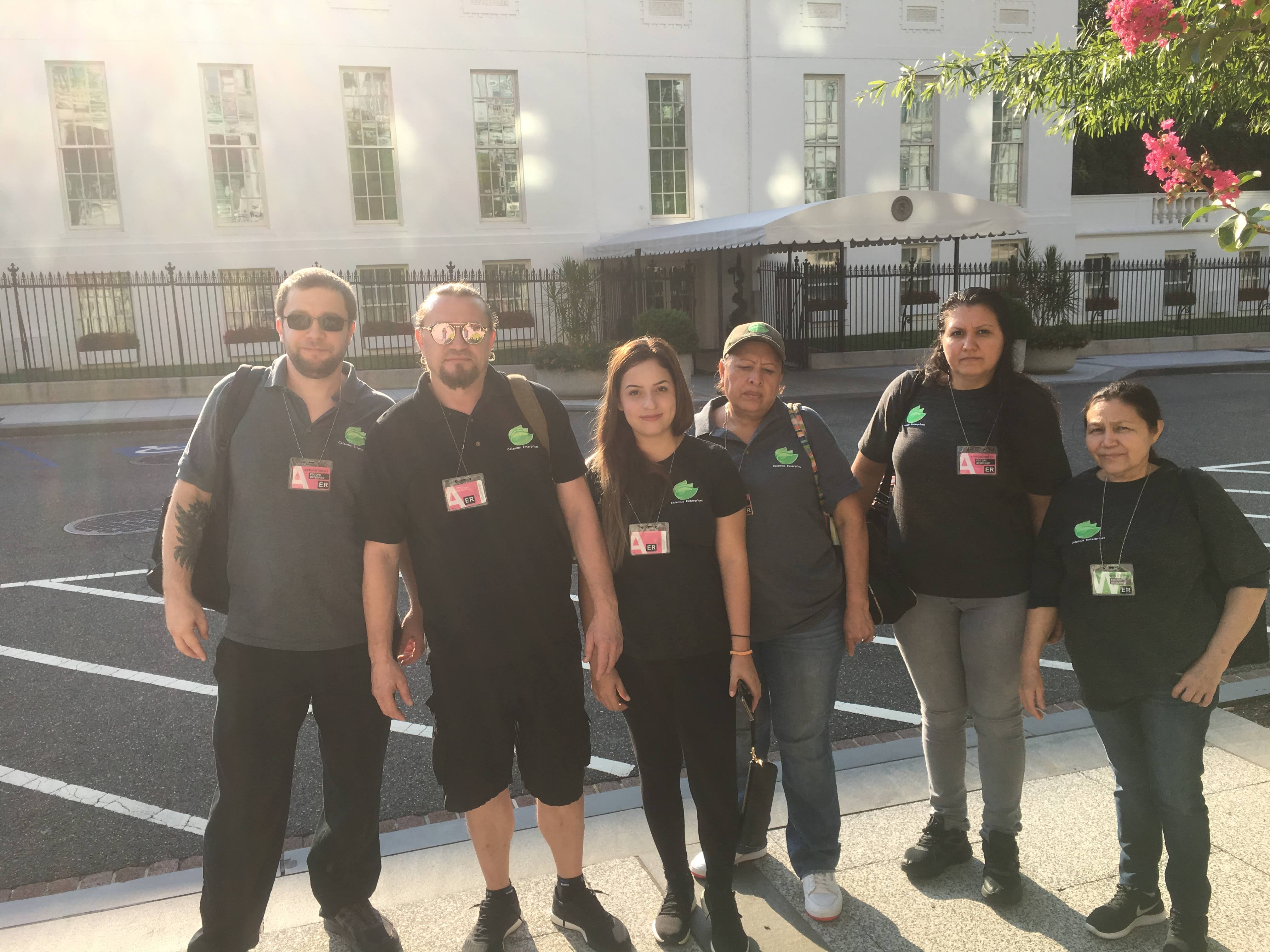
Calamus Enterprises commercial kitchen deep cleaning team on site, supporting compliance-driven food service environments.
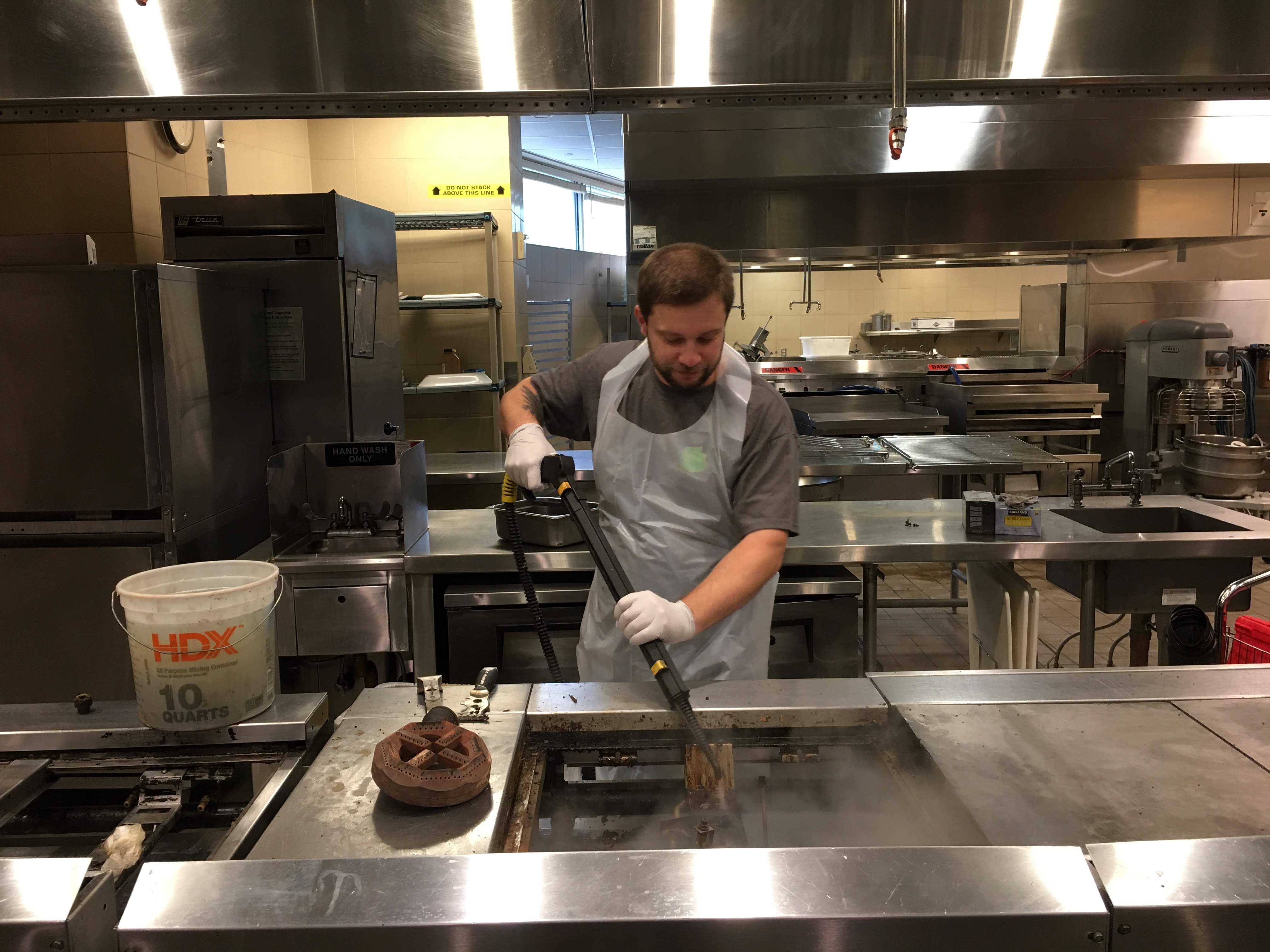
Commercial kitchen deep cleaning technician performing detailed equipment sanitation during an on-site service.
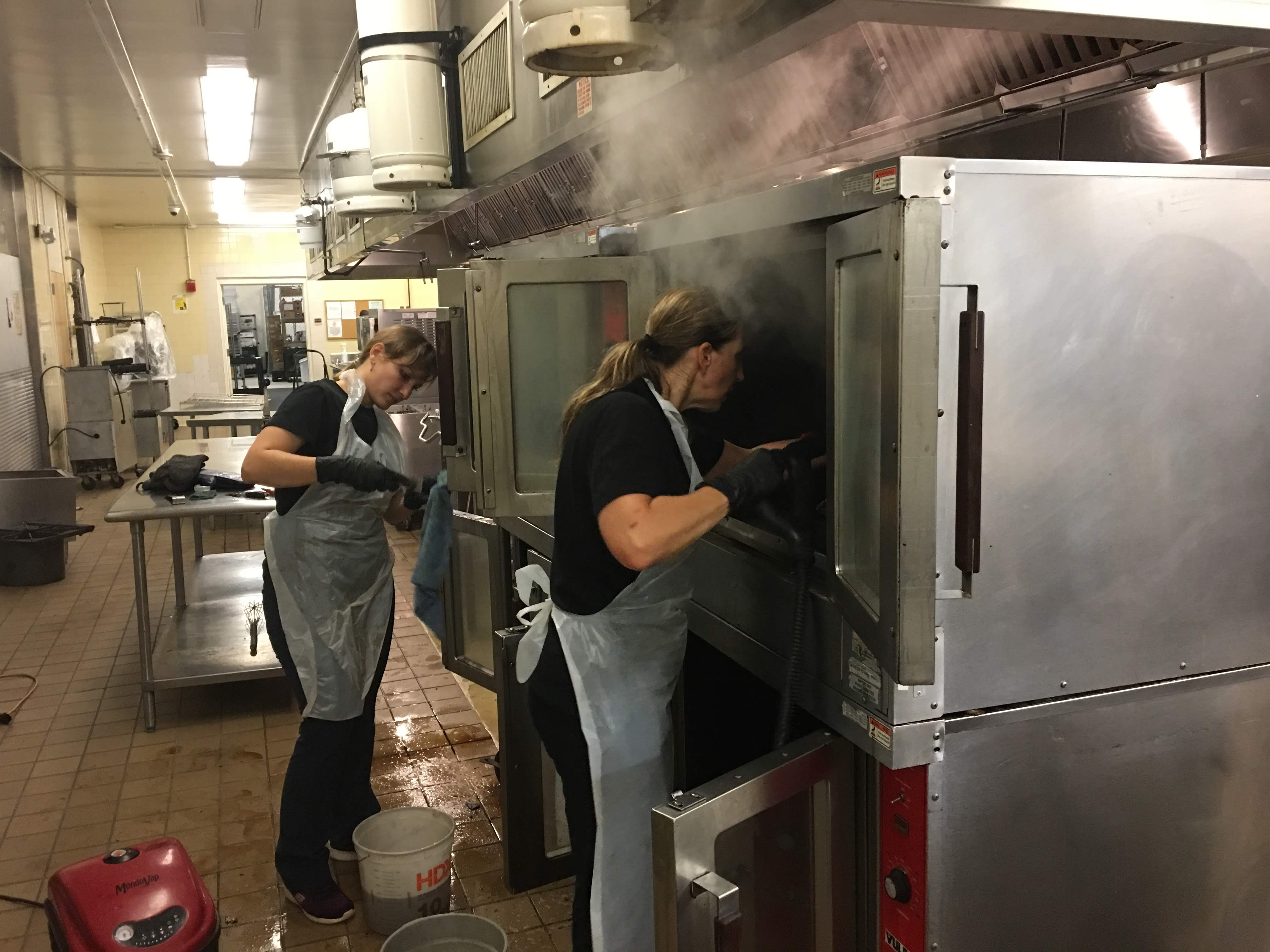
Kitchen steam cleaning in progress, addressing grease buildup behind commercial cooking equipment in a regulated facility.

Steam-based commercial kitchen deep cleaning targeting hard-to-reach areas beneath and behind cooking equipment.
Professional kitchen deep cleaning and kitchen steam cleaning services are increasingly used by federal, military, and airport facilities nationwide.
Commercial kitchens operating in government buildings, military installations, hospitals, airports, and large institutional facilities face stricter expectations than standard food service locations. Routine cleaning alone is often insufficient to address hidden grease accumulation, sanitation risks, and fire hazards that develop over time behind equipment, within ventilation zones, and on wall and ceiling surfaces. As a result, many regulated facilities are adopting structured, periodic deep-cleaning programs designed to reduce operational risk and improve compliance outcomes.
Calamus Enterprises focuses exclusively on commercial kitchen deep cleaning, rather than daily janitorial service. Its scope of work is designed to support long-term kitchen safety, reduce grease-related fire risk, and help facilities prepare for health and fire inspections. The company emphasizes local management, on-site supervision, and direct execution without subcontracting - an operational model particularly relevant for sensitive and restricted environments.
“Facilities that operate under heightened security and regulatory standards require more than basic cleaning,” said Mike Calamus, owner of Calamus Enterprises LLC. “They need experienced teams that understand controlled access, inspection requirements, and the importance of documented, professional execution. Our approach is built around hands-on oversight and steam-based deep cleaning for commercial kitchens where compliance and reliability matter.”
A Compliance-Focused Approach to Commercial Kitchen Sanitation
In many institutional kitchens, grease buildup and residue are not immediately visible but can pose long-term safety and sanitation risks. Deep cleaning addresses these conditions through targeted cleaning of cooking lines, equipment exteriors, high-heat zones, and surrounding structural surfaces. Steam-based methods are commonly used to loosen grease and contaminants while supporting sanitation goals in demanding environments.
Calamus Enterprises provides services including commercial kitchen deep cleaning, commercial kitchen equipment steam cleaning, wall and ceiling cleaning, and specialized deep-cleaning support for eligible facilities. The company regularly works with restaurants, hospitals, schools, churches, government kitchens, military bases, and airport food-service operations where adherence to internal protocols and external regulations is essential.
Experienced Teams and Local On-Site Management
Unlike generalized cleaning providers, Calamus Enterprises states that all work is performed by trained, insured technicians with extensive field experience. The company does not use subcontractors and does not operate a centralized call center. Instead, each service area is managed locally, with direct communication and on-site supervision intended to support consistency, accountability, and predictable results.
With more than a decade of commercial steam-cleaning experience, the company serves organizations across multiple U.S. regions, including the Mid-Atlantic, Southeast, Midwest, and West Coast.
Expanded Service Availability in Key Markets
The company’s current expansion highlights increased availability of services across:
• Kitchen Deep Cleaning Services Maryland
• Kitchen Deep Cleaning Services Washington DC
• Kitchen Deep Cleaning Services Virginia
• Kitchen Deep Cleaning Services North Carolina
Organizations seeking an initial scope review may request a rough estimate by providing a brief kitchen description and photos via email.
Service inquiries:
Email: info@steamcleaning.us
Website: https://www.steamcleaning.us/
Industry FAQ: Kitchen Deep Cleaning Services & Kitchen Steam Cleaning
1. What do professional kitchen deep cleaning services typically include?
Professional kitchen deep cleaning services address areas beyond daily cleaning, including cooking equipment exteriors, grease-prone zones, floor-wall junctions, and hard-to-reach spaces behind and under equipment. Many programs also include wall and ceiling cleaning where airborne grease accumulates. The goal is to reduce hidden contamination and improve long-term safety and compliance.
2. How is deep cleaning different from routine kitchen cleaning?
Routine cleaning maintains surface cleanliness and daily hygiene. Deep cleaning focuses on accumulated grease, residue, and contaminants that build up over time and may not be visible during normal operations. In regulated kitchens, deep cleaning is often scheduled periodically to support inspection readiness and fire-safety standards.
3. How often should a commercial kitchen be deep cleaned?
Frequency depends on kitchen volume, menu type, grease output, and regulatory requirements. Many commercial kitchens schedule deep cleaning annually, while high-volume or high-risk facilities may require more frequent service based on internal audits or inspection feedback.
4. Is professional kitchen deep cleaning worth the investment?
For many organizations, planned deep cleaning helps reduce the risk of failed inspections, operational shutdowns, and equipment damage. Compared to unplanned disruptions, preventive deep cleaning is often viewed as a risk-management measure rather than an optional expense.
5. Does steam cleaning effectively remove grease?
Steam cleaning can be effective at loosening baked-on grease and residue, particularly in high-heat areas. In professional applications, steam is typically combined with proper technique, surface agitation, and removal processes to ensure grease is fully extracted rather than redistributed.
6. Does steam cleaning sanitize commercial kitchens?
Steam cleaning can support sanitation by applying heat to contact surfaces. Effective outcomes depend on temperature, dwell time, surface type, and professional execution. In commercial kitchens, steam cleaning is usually part of a broader deep-clean process rather than a standalone step.
7. Where does grease go during steam cleaning?
In professional deep-cleaning operations, loosened grease and residue are captured through wiping, extraction, and controlled disposal. The objective is complete removal from the environment, not displacement to other surfaces.
8. Which areas of a kitchen typically need deep cleaning the most?
High-priority areas include cooking lines, fry and grill zones, behind and under equipment, wall and ceiling surfaces near heat sources, and areas where grease vapor settles over time.
9. How long does it take to deep clean a commercial kitchen?
Project duration varies based on kitchen size, buildup level, equipment quantity, and scope. Thorough deep cleaning may take multiple days in some facilities, especially where access, drying time, and operational schedules must be managed carefully.
10. How are kitchen deep cleaning services priced?
Pricing is typically based on scope, including kitchen size, equipment complexity, grease accumulation, and access requirements. Initial estimates are often refined after reviewing kitchen details and photos.
11. Why is deep cleaning important for fire safety?
Grease buildup is a known fire risk in commercial kitchens. Deep cleaning helps reduce accumulated grease in areas not addressed by routine cleaning, supporting safer operations and compliance with fire-safety expectations.
12. Can deep cleaning improve inspection outcomes?
While no service guarantees inspection results, kitchens that maintain documented cleaning standards and periodic deep cleaning often reduce avoidable inspection issues related to grease, residue, and sanitation gaps.
13. What makes high-security facilities different to clean?
High-security facilities may require controlled access, background-checked staff, strict scheduling, and on-site supervision. These environments prioritize professionalism, consistency, and adherence to internal protocols.
14. Does Calamus Enterprises use subcontractors?
Calamus Enterprises states that it performs all work directly with its own teams and does not subcontract services, supporting accountability and consistent execution.
15. Why is local management important in commercial kitchen cleaning?
Local management enables direct communication, faster coordination, and on-site oversight. For regulated kitchens, this approach can reduce delays and improve alignment between planning and execution.
16. Can deep cleaning help extend equipment life?
Removing grease and residue can improve airflow, reduce strain on components, and support better equipment performance over time, particularly in high-use kitchens.
17. Which regions are currently prioritized for service expansion?
The company’s current focus includes Maryland, Washington, DC, Virginia, and North Carolina, while continuing to support multi-state operations nationwide.
18. How can organizations request service or an estimate?
Organizations may contact Calamus Enterprises directly via info@steamcleaning.us or through the website to request service availability and initial scoping.
About Calamus Enterprises LLC
Calamus Enterprises LLC provides commercial kitchen deep cleaning services and kitchen steam cleaning for restaurants and regulated facilities across multiple U.S. regions. The company specializes exclusively in commercial kitchen deep cleaning, emphasizing experienced technicians, local on-site management, and direct execution without subcontracting.
Website: https://www.steamcleaning.us/
Media Contact
Calamus Enterprises LLC
Email: info@steamcleaning.us
Phone (HQ): (301) 275-5640
Marketing Team
Calamus Enterprises LLC
email us here
Legal Disclaimer:
EIN Presswire provides this news content "as is" without warranty of any kind. We do not accept any responsibility or liability for the accuracy, content, images, videos, licenses, completeness, legality, or reliability of the information contained in this article. If you have any complaints or copyright issues related to this article, kindly contact the author above.
