
Following the news from Asia and the Pacific
Provided by AGP
Australia Luxury Market 2026 - 2034 | Size, Share, Analysis
Australia luxury market
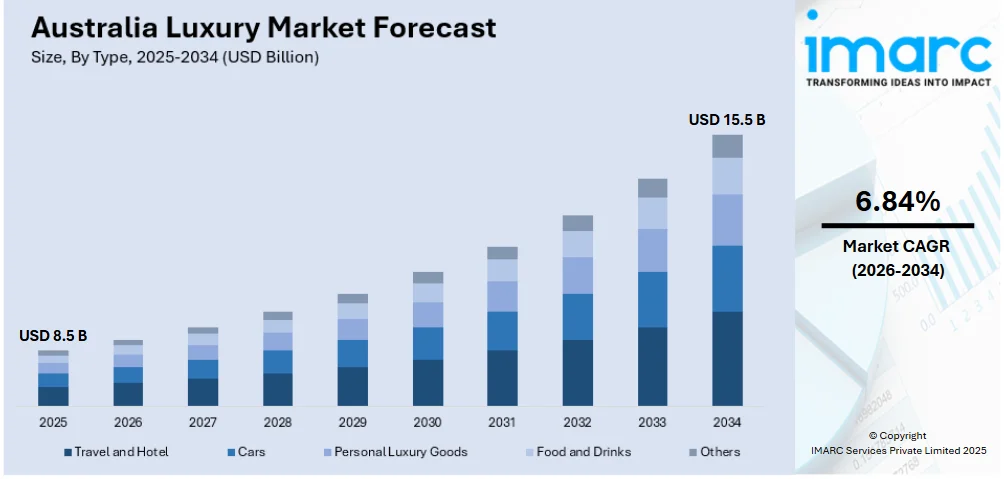
Australia luxury market size reached USD 8.5 Billion in 2025, is expected to reach USD 15.5 Billion by 2034, exhibiting a growth rate (CAGR) of 6.84% 2026-2034
AUSTRALIA, May 12, 2026 /EINPresswire.com/ -- Market Size: USD 8.5 Billion (2025)Forecast: USD 15.5 Billion (2034)
CAGR: 6.84% (2026–2034)
𝐀𝐮𝐬𝐭𝐫𝐚𝐥𝐢𝐚 𝐋𝐮𝐱𝐮𝐫𝐲 𝐌𝐚𝐫𝐤𝐞𝐭 𝐎𝐯𝐞𝐫𝐯𝐢𝐞𝐰
The Australia luxury market is experiencing a transformative phase of expansion, driven by a growing high-net-worth individual population, evolving consumer preferences toward experiential and sustainable luxury, and accelerating digital transformation across premium retail channels. The market is establishing itself as a vibrant and sophisticated segment spanning personal luxury goods, luxury travel and hospitality, premium automotive, and high-end food and beverages. With luxury retail trade reaching AUD 6.2 billion and experiential luxury recording 6% value CAGR, the sector is increasingly defined by personalization, quiet luxury aesthetics, and omnichannel engagement strategies that resonate with affluent millennials and Generation Z consumers.
𝐖𝐡𝐲 𝐈𝐬 𝐭𝐡𝐞 𝐀𝐮𝐬𝐭𝐫𝐚𝐥𝐢𝐚 𝐋𝐮𝐱𝐮𝐫𝐲 𝐌𝐚𝐫𝐤𝐞𝐭 𝐇𝐨𝐭 𝐓𝐨𝐝𝐚𝐲?
Australia’s luxury sector is commanding exceptional attention as rising affluence, international tourism recovery, and digital innovation are converging to reshape premium consumption patterns. The high-net-worth individual population is expanding steadily, driving demand for exclusive products and bespoke experiences. Major luxury houses including LVMH, Kering, Hermès, and Chanel are reinforcing their Australian retail presence. The quiet luxury movement is gaining momentum as consumers favor understated craftsmanship over ostentatious branding. Seventy-seven percent of Australian retailers believe AI agents will be essential for competition within a year, while 74% are planning to increase AI spending to enhance personalized luxury experiences.
𝐌𝐚𝐫𝐤𝐞𝐭 𝐆𝐫𝐨𝐰𝐭𝐡 𝐓𝐫𝐚𝐣𝐞𝐜𝐭𝐨𝐫𝐲 𝐚𝐧𝐝 𝐒𝐭𝐫𝐚𝐭𝐞𝐠𝐢𝐜 𝐎𝐩𝐩𝐨𝐫𝐭𝐮𝐧𝐢𝐭𝐢𝐞𝐬
The Australia luxury market is witnessing a powerful convergence of demographic tailwinds, sustainability imperatives, and digital transformation that is creating compelling growth opportunities across all luxury categories. Virtual try-on technologies, AI-driven recommendations, and augmented reality experiences are enhancing omnichannel luxury shopping. Sustainable luxury practices including eco-friendly materials, circular economy programs, and ethical sourcing are becoming critical brand differentiators. Post-pandemic international tourism recovery is revitalizing luxury hospitality and travel segments. Direct-to-consumer digital platforms are enabling premium brands to deepen customer relationships and deliver hyper-personalized experiences nationwide.
Request a Business Sample Report for Procurement & Investment Evaluation:
https://www.imarcgroup.com/australia-luxury-market/requestsample
𝐌𝐚𝐫𝐤𝐞𝐭 𝐆𝐫𝐨𝐰𝐭𝐡 𝐃𝐫𝐢𝐯𝐞𝐫𝐬
• Rising high-net-worth individual population with increasing disposable incomes is driving structural demand for exclusive personal luxury goods, premium experiences, and bespoke services across Australian metropolitan markets.
• Experiential luxury recording 6% value CAGR as affluent consumers increasingly prioritize curated travel experiences, fine dining, luxury wellness, and personalized services over material acquisitions alone.
• International tourism recovery is revitalizing luxury hospitality, premium retail destinations, and experiential tourism segments across Sydney, Melbourne, Gold Coast, and emerging luxury regional destinations.
• Digital transformation with 77% of Australian retailers believing AI agents essential for competition within a year, driving investment in virtual try-ons, AR experiences, and hyper-personalized customer engagement.
• Millennial and Generation Z affluent consumers entering the luxury market with distinct preferences for sustainable practices, quiet luxury aesthetics, and digitally-enabled brand interactions.
𝐋𝐚𝐭𝐞𝐬𝐭 𝐌𝐚𝐫𝐤𝐞𝐭 𝐍𝐞𝐰𝐬
• January 2025: Ark Capital Partners acquired Melbourne Place Hotel, expanding its luxury hospitality portfolio and signaling strong investor confidence in Australia’s premium accommodation sector.
• 2025: Louis Vuitton introduced a new version of its renowned “Capucines” handbag in Australia, available in luxurious leathers and bold colours, underscoring ongoing commitment to craftsmanship and the Australian luxury consumer.
• April 2024: La Bottega acquired a majority stake in Vanity Group, expanding its premium beauty and personal care portfolio across Australian luxury retail channels and hospitality venues.
• March 2024: Luxury Escapes launched Agent Hub, a dedicated platform for travel agents to access and book exclusive luxury travel packages, enhancing distribution capabilities across the premium travel segment.
• 2024–2025: Major luxury houses including LVMH, Kering, Hermès, Chanel, and Cartier reinforced their Australian retail presence through store refurbishments, new format openings, and enhanced digital shopping experiences.
𝐀𝐮𝐬𝐭𝐫𝐚𝐥𝐢𝐚 𝐋𝐮𝐱𝐮𝐫𝐲 𝐌𝐚𝐫𝐤𝐞𝐭 𝐒𝐮𝐦𝐦𝐚𝐫𝐲:
• Personal luxury goods including fashion, jewellery, watches, and leather accessories are commanding the largest product category share, driven by growing HNWI populations and millennial/Gen Z entry into premium consumption.
• Experiential luxury encompassing premium travel, luxury hospitality, fine dining, and wellness is recording 6% value CAGR as affluent consumers increasingly prioritize curated experiences over material acquisitions.
• Luxury watches and jewellery are expanding at 4.1% CAGR through 2032, driven by affluent consumer preference for craftsmanship, exclusivity, and superior-quality materials with investment value retention.
• The quiet luxury movement is reshaping brand strategies, with consumers favoring understated elegance, premium craftsmanship, and subtle quality over ostentatious branding and conspicuous consumption patterns.
• Monobrand stores are maintaining distribution leadership while online stores emerge as the fastest-growing channel through virtual try-ons, AI recommendations, and personalized omnichannel luxury experiences.
• Sustainability is transitioning from optional differentiator to baseline expectation, with eco-friendly materials, circular economy programs, ethical sourcing, and carbon-neutral operations becoming critical for luxury brand positioning.
• Major international luxury houses including LVMH, Kering, Hermès, Chanel, Cartier, Rolex, and Armani maintain strong Australian presence through flagship stores and enhanced digital engagement platforms.
• ACT & New South Wales is commanding the leading regional share driven by Sydney’s concentrated HNWI population, premium retail precincts, luxury hospitality infrastructure, and international tourism gateway status.
𝐇𝐨𝐰 𝐀𝐈 𝐈𝐬 𝐑𝐞𝐬𝐡𝐚𝐩𝐢𝐧𝐠 𝐭𝐡𝐞 𝐀𝐮𝐬𝐭𝐫𝐚𝐥𝐢𝐚 𝐋𝐮𝐱𝐮𝐫𝐲 𝐌𝐚𝐫𝐤𝐞𝐭
Artificial intelligence is rapidly emerging as a transformative force across Australia’s luxury sector, fundamentally reshaping personalization, retail operations, customer engagement, and brand storytelling — with 77% of Australian retailers believing AI agents will be essential for competition within a year and 74% planning to increase AI investment.
• AI-powered hyper-personalization engines are enabling luxury brands to deliver individualized product recommendations, bespoke styling advice, and curated shopping experiences based on customer purchase history, browsing behavior, and lifestyle preference data.
• Augmented reality and virtual try-on technologies powered by AI are transforming luxury e-commerce, enabling consumers to visualize watches, jewellery, fashion, and accessories on themselves digitally before purchasing from premium online boutiques.
• AI-driven demand forecasting and inventory optimization platforms are enabling luxury retailers to predict trending styles, manage limited-edition releases, and optimize stock allocation across flagship stores and omnichannel touchpoints.
• Natural language processing and conversational AI are powering luxury concierge chatbots and virtual styling assistants that deliver white-glove digital service experiences mirroring the personalized attention of premium in-store interactions.
• AI-enhanced authentication and provenance verification platforms are enabling luxury brands and pre-owned marketplaces to combat counterfeiting, verify product authenticity, and build consumer trust through blockchain-integrated digital certificates.
𝐌𝐚𝐫𝐤𝐞𝐭 𝐓𝐫𝐞𝐧𝐝𝐬 𝐚𝐧𝐝 𝐈𝐧𝐬𝐢𝐠𝐡𝐭𝐬
• The quiet luxury aesthetic is gaining momentum across Australian affluent consumers, with preference for understated elegance, premium craftsmanship, and subtle quality driving demand for heritage brands offering timeless, non-logo-driven products.
• Experiential luxury is outpacing material goods growth at 6% value CAGR, with affluent consumers increasingly allocating spending toward curated travel, fine dining, luxury wellness, exclusive events, and personalized service experiences.
• Sustainable luxury practices including eco-friendly materials, circular economy programs, ethical sourcing, and carbon-neutral operations are transitioning from competitive advantage to baseline brand expectation across premium segments.
• Digital transformation is accelerating with AI-powered personalization, virtual try-ons, augmented reality experiences, and omnichannel integration enabling luxury brands to deliver seamless premium experiences across physical and digital touchpoints.
• Millennial and Generation Z affluent consumers are entering the luxury market with distinct preferences for brand values alignment, sustainability commitments, digital-first engagement, and authentic storytelling over traditional status signaling.
• International tourism recovery is revitalizing luxury hospitality, premium shopping destinations, and experiential tourism across Sydney, Melbourne, and emerging luxury regional destinations including the Gold Coast and Barossa Valley.
𝐌𝐚𝐫𝐤𝐞𝐭 𝐆𝐫𝐨𝐰𝐭𝐡 𝐃𝐫𝐢𝐯𝐞𝐫𝐬 — 𝐃𝐞𝐭𝐚𝐢𝐥𝐞𝐝 𝐀𝐧𝐚𝐥𝐲𝐬𝐢𝐬
𝐑𝐢𝐬𝐢𝐧𝐠 𝐀𝐟𝐟𝐥𝐮𝐞𝐧𝐜𝐞, 𝐄𝐱𝐩𝐞𝐫𝐢𝐞𝐧𝐭𝐢𝐚𝐥 𝐃𝐞𝐦𝐚𝐧𝐝, 𝐚𝐧𝐝 𝐓𝐨𝐮𝐫𝐢𝐬𝐦 𝐑𝐞𝐜𝐨𝐯𝐞𝐫𝐲
Australia’s luxury market is being propelled by a growing HNWI population with rising disposable incomes driving demand for exclusive goods and bespoke experiences. Experiential luxury is recording 6% CAGR as affluent consumers prioritize curated travel, fine dining, and wellness. Post-pandemic international tourism recovery is revitalizing luxury hospitality and premium retail destinations across major cities. Millennial and Generation Z consumers are entering the market with preferences for personalization and authentic brand engagement.
𝐃𝐢𝐠𝐢𝐭𝐚𝐥 𝐓𝐫𝐚𝐧𝐬𝐟𝐨𝐫𝐦𝐚𝐭𝐢𝐨𝐧, 𝐒𝐮𝐬𝐭𝐚𝐢𝐧𝐚𝐛𝐢𝐥𝐢𝐭𝐲 𝐈𝐦𝐩𝐞𝐫𝐚𝐭𝐢𝐯𝐞𝐬, 𝐚𝐧𝐝 𝐁𝐫𝐚𝐧𝐝 𝐈𝐧𝐧𝐨𝐯𝐚𝐭𝐢𝐨𝐧
Digital transformation is reshaping luxury consumption with 77% of retailers viewing AI agents as competitively essential within a year. Virtual try-ons, AR experiences, and hyper-personalized recommendations are enhancing omnichannel luxury shopping. Sustainability is transitioning from differentiator to baseline expectation with eco-friendly materials and circular economy practices. Major luxury houses are reinforcing Australian retail presence through flagship refurbishments, new formats, and enhanced digital platforms.
𝐊𝐞𝐲 𝐓𝐫𝐞𝐧𝐝𝐬 𝐒𝐡𝐚𝐩𝐢𝐧𝐠 𝐭𝐡𝐞 𝐀𝐮𝐬𝐭𝐫𝐚𝐥𝐢𝐚 𝐋𝐮𝐱𝐮𝐫𝐲 𝐌𝐚𝐫𝐤𝐞𝐭 𝐋𝐚𝐧𝐝𝐬𝐜𝐚𝐩𝐞 𝐈𝐧𝐜𝐥𝐮𝐝𝐞:
• Quiet luxury aesthetics gaining momentum with affluent consumers preferring understated elegance, premium craftsmanship, and heritage brand positioning over ostentatious branding and conspicuous consumption.
• Experiential luxury outpacing material goods at 6% value CAGR, with curated travel, wellness, fine dining, and personalized services commanding growing allocation of affluent consumer spending.
• AI-powered personalization with 77% of retailers viewing AI agents as essential, driving investment in virtual try-ons, augmented reality, and hyper-personalized omnichannel luxury experiences.
• Sustainable luxury transitioning from competitive advantage to baseline brand requirement, with eco-friendly materials, circular economy programs, and ethical sourcing becoming consumer expectations.
• Millennial and Gen Z affluent consumers reshaping luxury demand with preferences for brand values alignment, digital-first engagement, sustainability, and authentic storytelling over traditional status.
• International tourism recovery revitalizing luxury hospitality, premium retail destinations, and experiential tourism across Sydney, Melbourne, Gold Coast, and emerging regional luxury markets.
• Pre-owned and circular luxury gaining mainstream acceptance through AI-powered authentication platforms, enabling luxury resale markets to attract sustainability-conscious affluent consumers.
𝐊𝐞𝐲 𝐀𝐬𝐩𝐞𝐜𝐭𝐬 𝐑𝐞𝐪𝐮𝐢𝐫𝐞𝐝 𝐟𝐨𝐫 𝐀𝐮𝐬𝐭𝐫𝐚𝐥𝐢𝐚 𝐋𝐮𝐱𝐮𝐫𝐲 𝐌𝐚𝐫𝐤𝐞𝐭:
• Product type segmentation covering personal luxury goods, luxury travel and hospitality, premium automotive, luxury food and beverages, and experiential luxury with value share and growth analysis.
• Gender-based demand analysis covering male and female luxury consumption patterns, category preferences, spending behavior, and emerging gender-fluid luxury positioning strategies.
• Distribution channel analysis across monobrand stores, multibrand stores, online stores, and department stores with channel growth rates, digital penetration, and omnichannel integration assessments.
• Regional demand distribution across ACT & NSW, Victoria & Tasmania, Queensland, NT & SA, and Western Australia with luxury retail density, HNWI concentration, and tourism contribution mapping.
• Consumer demographics and behavior covering HNWI population trends, millennial/Gen Z luxury entry, spending patterns, brand preferences, and sustainability-driven purchasing decisions.
• Competitive landscape assessment covering international luxury houses (LVMH, Kering, Hermès, Chanel, Richemont), domestic premium brands, and emerging luxury platforms with market positioning.
• Digital transformation analysis covering AI-powered personalization, virtual try-ons, AR experiences, omnichannel integration, social commerce, and D2C digital luxury platform strategies.
• Sustainability and circular economy analysis covering eco-friendly materials, ethical sourcing, carbon-neutral operations, circular luxury programs, and pre-owned luxury market development.
• Pricing and premiumization dynamics covering luxury tier segmentation (accessible, aspirational, absolute), price positioning strategies, and consumer price sensitivity across categories.
𝐌𝐚𝐫𝐤𝐞𝐭 𝐒𝐞𝐠𝐦𝐞𝐧𝐭𝐚𝐭𝐢𝐨𝐧
IMARC Group’s research categorizes the Australia luxury market as follows:
𝐁𝐲 𝐓𝐲𝐩𝐞
• Travel and Hotel
• Cars
• Personal Luxury Goods
• Food and Drinks
• Others
𝐁𝐲 𝐆𝐞𝐧𝐝𝐞𝐫
• Male
• Female
𝐁𝐲 𝐃𝐢𝐬𝐭𝐫𝐢𝐛𝐮𝐭𝐢𝐨𝐧 𝐂𝐡𝐚𝐧𝐧𝐞𝐥
• Monobrand Stores
• Multibrand Stores
• Online Stores
• Others
𝐁𝐲 𝐑𝐞𝐠𝐢𝐨𝐧
• Australian Capital Territory & New South Wales
• Victoria & Tasmania
• Queensland
• Northern Territory & South Australia
• Western Australia
𝐊𝐞𝐲 𝐏𝐥𝐚𝐲𝐞𝐫𝐬
The competitive landscape of the Australia luxury market features a concentrated structure dominated by major international luxury conglomerates and premium brands. Key players include LVMH Moët Hennessy Louis Vuitton SE (Christian Dior Australia), Kering S.A. (Gucci Australia), Chanel (Australia) Pty Ltd., Hermès Australia Pty Ltd., Estée Lauder Pty Ltd., Cartier S.A., Rolex S.A., Giorgio Armani S.p.A., Tiffany & Co., and Richemont. Domestic premium brands and emerging luxury platforms are also competing for affluent consumer attention. Detailed profiles are provided within the full IMARC Group research report.
𝐑𝐞𝐜𝐞𝐧𝐭 𝐍𝐞𝐰𝐬 𝐚𝐧𝐝 𝐃𝐞𝐯𝐞𝐥𝐨𝐩𝐦𝐞𝐧𝐭𝐬
2025–2026: Australian and New Zealand luxury retailers report 77% believing AI agents will be essential for competition within a year, with 74% planning to increase AI spending for personalized luxury experiences and omnichannel engagement.
January 2025: Ark Capital Partners acquired Melbourne Place Hotel, expanding its luxury hospitality portfolio and signaling strong investor confidence in Australia’s premium accommodation sector.
2025: Louis Vuitton introduced a new version of its renowned “Capucines” handbag in Australia, available in luxurious leathers and bold colours, reinforcing the brand’s commitment to craftsmanship for the Australian market.
2024–2025: Major luxury houses including LVMH, Kering, Hermès, and Chanel reinforced their Australian retail presence through flagship store refurbishments, new format openings, and enhanced digital shopping experiences.
April 2024: La Bottega acquired a majority stake in Vanity Group, expanding its premium beauty and personal care portfolio across Australian luxury retail channels and hospitality distribution networks.
Browse the Full Report with TOC & List of Figures: https://www.imarcgroup.com/australia-luxury-market
𝐂𝐮𝐬𝐭𝐨𝐦𝐢𝐳𝐚𝐭𝐢𝐨𝐧 𝐎𝐩𝐭𝐢𝐨𝐧𝐬 𝐀𝐯𝐚𝐢𝐥𝐚𝐛𝐥𝐞 𝐟𝐨𝐫 𝐀𝐮𝐬𝐭𝐫𝐚𝐥𝐢𝐚 𝐋𝐮𝐱𝐮𝐫𝐲 𝐌𝐚𝐫𝐤𝐞𝐭:
• Regional analysis by state/territory including ACT & NSW, Victoria & Tasmania, Queensland, NT & SA, and Western Australia with luxury retail density, HNWI concentration, and tourism contribution mapping.
• Product type segmentation covering personal luxury goods, travel & hospitality, premium automotive, food & beverages, and experiential luxury with category growth rates and consumer preference analysis.
• Gender-based demand analysis covering male and female luxury consumption patterns, category preferences, and emerging gender-fluid luxury positioning strategies.
• Distribution channel deep-dive across monobrand stores, multibrand stores, online platforms, department stores, and duty-free with digital penetration and omnichannel integration assessments.
• Consumer demographics analysis covering HNWI population trends, millennial/Gen Z luxury entry patterns, spending behavior segmentation, and sustainability-driven purchase decision mapping.
• Digital transformation analysis covering AI personalization, virtual try-ons, augmented reality, social commerce, live shopping, and D2C luxury platform adoption rates.
• Sustainability and circular luxury analysis covering eco-friendly materials, ethical sourcing, carbon-neutral operations, pre-owned luxury market development, and authentication technology.
Other Report By IMARC Group:
Australia Flower Market 2026-2034: https://www.imarcgroup.com/australia-flower-market
Australia Skincare Market 2026-2034: https://www.imarcgroup.com/australia-skincare-market
Australia Steel Market 2026-2034: https://www.imarcgroup.com/australia-steel-market
Australia Nutritional Supplements Market 2026-2034: https://www.imarcgroup.com/australia-nutritional-supplements-market
Australia Data Center Power Market 2026-2034: https://www.imarcgroup.com/australia-data-center-power-market
𝐀𝐛𝐨𝐮𝐭 𝐔𝐬
IMARC Group is a global management consulting firm that helps the world’s most ambitious changemakers to create a lasting impact. The company provides a comprehensive suite of market entry and expansion services. IMARC offerings include thorough market assessment, feasibility studies, company incorporation assistance, factory setup support, regulatory approvals and licensing navigation, branding, marketing and sales strategies, competitive landscape and benchmarking analyses, pricing and cost research, and procurement research.
𝐂𝐨𝐧𝐭𝐚𝐜𝐭 𝐔𝐬
IMARC Group
134 N 4th St., Brooklyn, NY 11249, USA
Email: sales@imarcgroup.com
Tel. No.: (D) +91 120 433 0800
United States: +1-201-971-6302
Elena Anderson
IMARC Services Private Limited
+1 201-971-6302
email us here
Legal Disclaimer:
EIN Presswire provides this news content "as is" without warranty of any kind. We do not accept any responsibility or liability for the accuracy, content, images, videos, licenses, completeness, legality, or reliability of the information contained in this article. If you have any complaints or copyright issues related to this article, kindly contact the author above.
